
🍞 Starting Your First Food Inputs — Feeding Schedule & CareUpdated 2 months ago
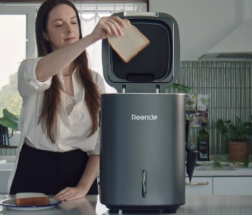
◻ What to Add First: Bread
For your first input, use bread — a preferred food for Bacillus microbes that decomposes quickly (typically 6–8 hours). This confirms your microbes are active and healthy before moving to other foods.
◻ Gradual Input Schedule
Don't add large quantities all at once early on — build up gradually:
| Phase | Prime | Gravity / Gravity Pro |
|---|---|---|
| Days 1–5 | Up to 300g | Up to 300g |
| Week 1–2 | Up to 500g | Up to 500g |
| Week 2–4 | Up to 700g–1kg (max) | Up to 700g–1kg |
| Week 4+ | — | Up to 1kg–1.5kg (max) |
Before each next batch, check:
- Has the previous food fully decomposed?
- Is moisture at an appropriate level?
- If microbes are clumped or too wet, wait at least half a day before the next input.
- Dry foods (crackers, bread, cooked rice) can be added anytime.
- High-moisture foods (fruit peels, watermelon rind) are best added after the previous batch has mostly decomposed and microbes are neither clumped nor overly wet.
◻ Balancing Carbon and Nitrogen (C:N Ratio)
Healthy microbes thrive at a C:N ratio of ~30:1. Most food scraps (fruit peels, meat, cooked vegetables) are nitrogen-heavy, which can throw off the balance over time — causing odors or slow decomposition.
Add carbon-rich materials regularly alongside food scraps:
| Carbon-Rich Input | Notes |
|---|---|
| Bread or crackers | Decomposes quickly, great for balancing |
| Unbleached kitchen paper towel | Cut into finger-sized pieces; pour 1 cup water over them if microbes are too dry |
For more on microbe appearance and moisture care, see:
👉 🦠 Understanding Your Microbes — Appearance & Moisture Care